Jason Zook.
Six last names. Seven million dollars from weird internet businesses. One deliberate, unconventional life in a small Portuguese beach town, built on the radical premise that enough is enough.
Still doing weird things, just not quite as weird nowadays.
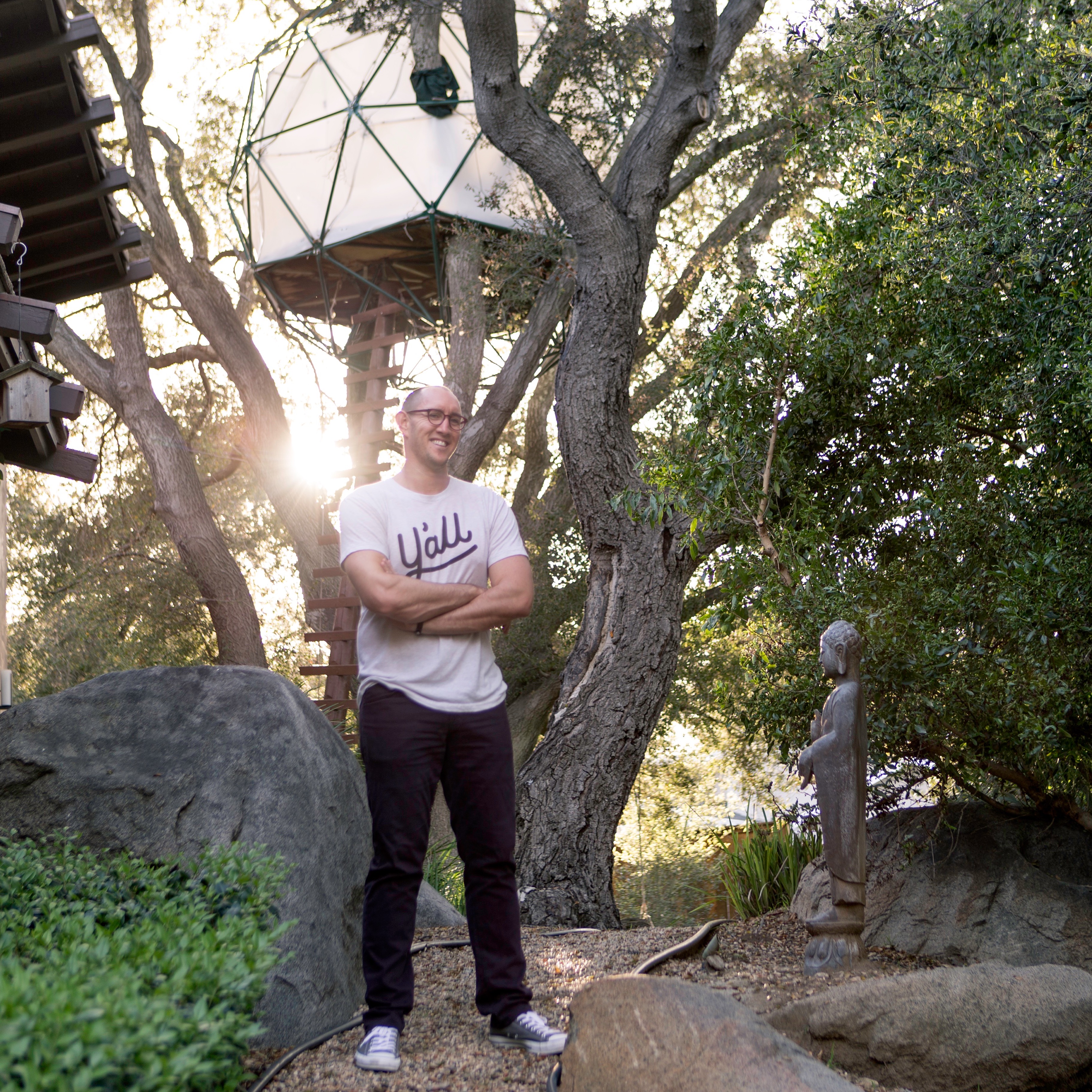
If you're trying to find me in 2026, you walk down a cobblestone lane in a small Portuguese town until you reach a cafe where the owner knows my order, which is coffee with coffee next to it. I don't keep a schedule. I wake without an alarm. I bake cinnamon rolls that my daughter Leon regards with polite suspicion. This is the life I have, by roundabout and occasionally expensive means, chosen.
I'm also, depending on which corner of the internet remembers me, the guy who wore a different company's t-shirt every day for five years. Or the guy who auctioned his last name. Twice. Or the guy who sold his entire professional future for a thousand dollars a pop, which sounds fake but isn't.
I have had six legal last names, which TSA has feelings about. I have made, by my own accounting, over seven million dollars from businesses that didn't exist before I invented them. I have also been $124,000 in debt, publicly broke, and photographed crying in an H&M dressing room. What follows is the full circuit.
I wore a different company's shirt every single day for five years. Yes, even to a friend's wedding.
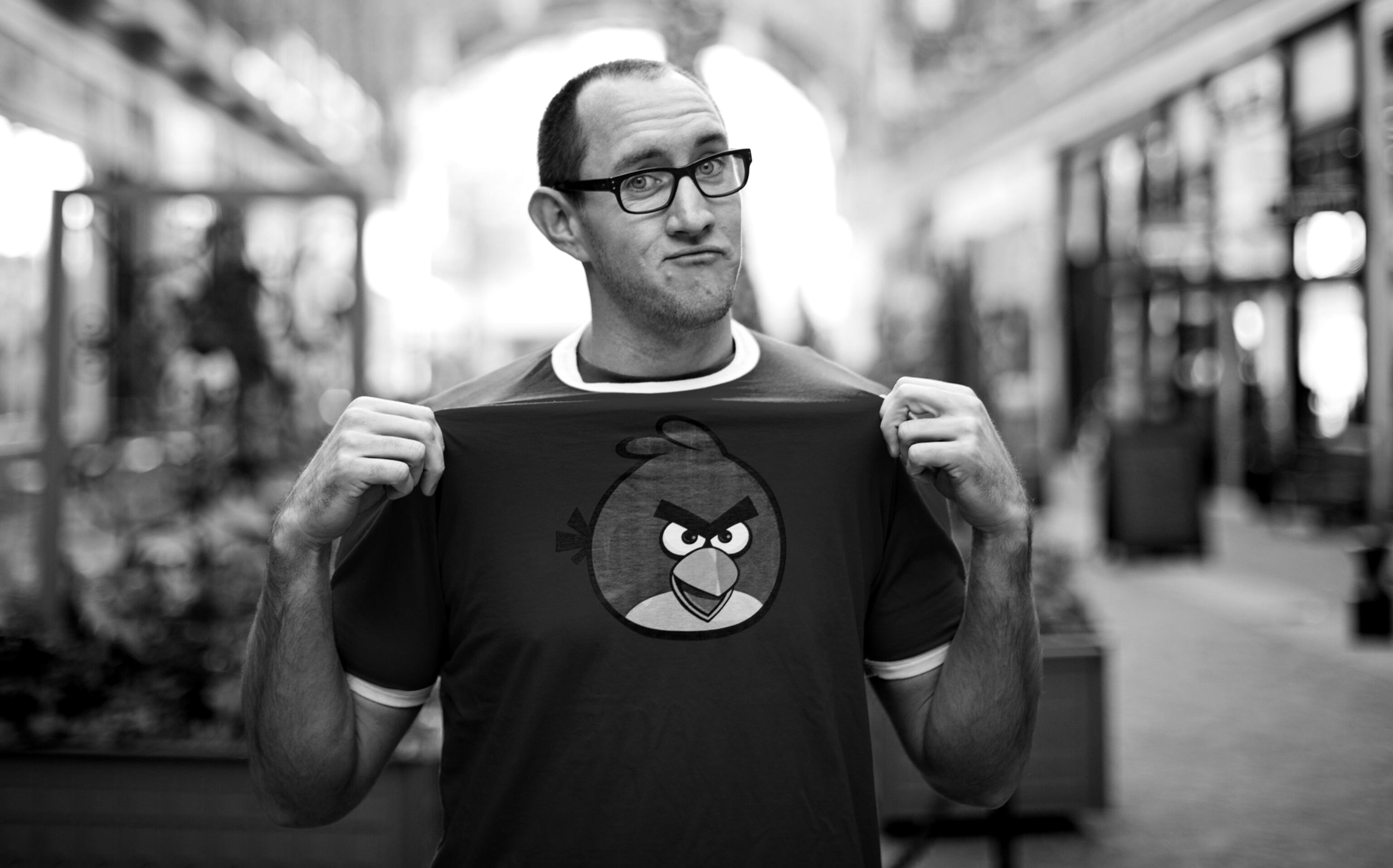
On January 1, 2009, a twenty-six-year-old version of me (then Jason Sadler) put on a branded t-shirt, pointed a $50 Flip camera at himself, and uploaded the evidence to YouTube. The shirt cost my sponsor one dollar. The next day's shirt cost two. By December 31st the daily rate was $365, at which point several CMOs quietly questioned their life choices. I called the company IWearYourShirt, because naming things was not yet my strong suit.
It was, depending on your tolerance for self-promotion, either the dumbest business on the internet or the most honest one. There were no algorithms. No engagement metrics. You paid a man to wear your logo and yell about your product at a camera. That was the entire transaction.
Within two years it was a legitimate media phenomenon. Today Show. CBS Evening News. Forbes. HuffPost. I worked with over 1,600 companies across five years, including Starbucks, Nissan, Zappos, Angry Birds, and, for reasons nobody's parents ever fully understood, Pepperidge Farm. Annual revenue climbed past $200,000, then past $500,000. At its peak, a one-man t-shirt stunt was grossing close to $600,000 a year.
I was, maybe, the first social media influencer. I was doing the thing before the word "influencer" existed, which is either a historical distinction or an embarrassing family origin story, depending on the day.
- Founded
- January 1, 2009
- Clients
- 1,600+ businesses
- Total Revenue
- $1,000,000+
- Initial Investment
- ~$300 on coat hangers
The business model was brilliant. The execution was me in pajamas at 2am because I had to be on camera at 8am. Both can be true at the same time.
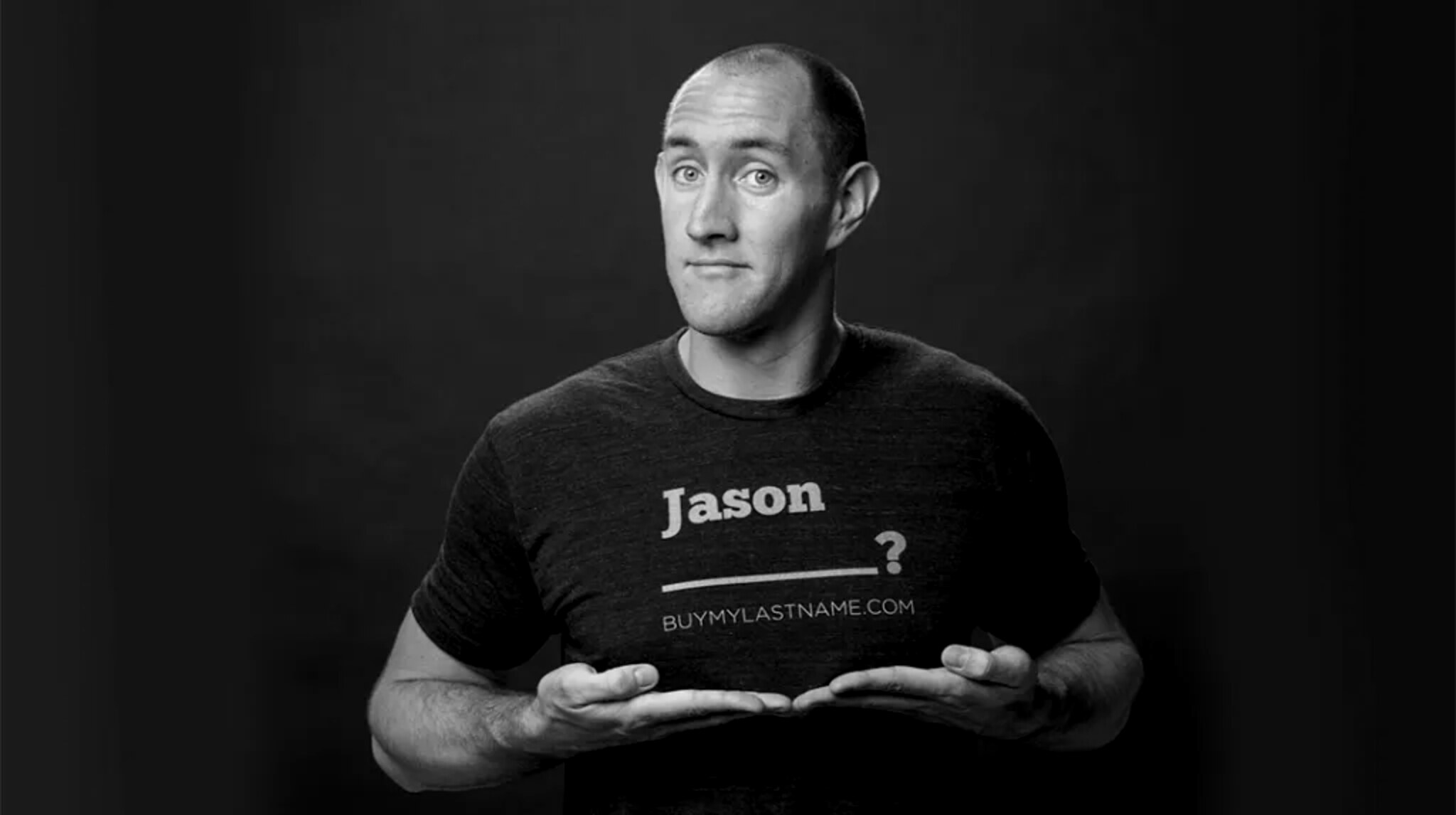
i auctioned off my last name twice
Before Headsets.com won the first auction with $45,500, the offers included a year's supply of ceramic teeth, a custom jingle, and a Costco sheet cake shaped like a giant hot dog. I said yes to the boring cash. In retrospect, the correct call. A year later, SurfrApp won the second auction for $50,000. That name looked ridiculous on a passport.
Six last names. Each one, a small betrayal of a birth certificate.
Click a name below. The photo and year will change. Nothing else will, because in all these photos, it's still me.
My great-grandfather Roy Zook's name. The first one I chose for myself. Also the shortest, which TSA agents appreciate.
The business made a million dollars. The founder was broke.
Here's the part the news coverage usually left out. While IWearYourShirt was grossing close to $600,000 a year, I did not fully understand the difference between revenue and profit. I hired five people. I worked 14 to 16 hour days. I scaled a business that was, structurally speaking, a guy wearing a shirt. My grandmother loaned me money. I spent that money. By the time IWearYourShirt wound down in May 2013, I was $124,000 in debt.
I have written about all of this with the kind of transparency that makes other founders uncomfortable and my therapist briefly proud. The numbers were public. The burnout was public. The lesson, as I later put it, was that I had confused making money with making a life, and had cost myself most of both.
There's a particular kind of failure that only happens to people who succeed first. The fall is worse because the height was real. The good news is you already know how to fail. The bad news is you already know how to fail.
She was my employee first. Then my partner. Then the reason any of this stopped being a disaster.
Caroline Kelso's first job at IWearYourShirt was, broadly speaking, adult supervision. We got together in 2010 and married in March 2017. Between those two dates, we paid off $124,000 in debt together, in three years, while simultaneously launching new businesses from scratch.
Caroline had her own career. A design studio called Made Vibrant that became an online course hub for creatives. She wasn't a supporting character. She was building her own thing. When our professional lives eventually merged, it was a partnership between two people who already owned their individual catastrophes.
The debt recovery reshaped my entire worldview. Before the collapse, the question was always how much more? After, the question became how much is enough? It is the single most important pivot of my career, and it had nothing to do with a product.
"Minimum Monthly Magic" is a real term i invented.
Calculate the smallest dollar amount your life needs to feel magical each month. Build your business to hit exactly that. Not more. It is the opposite of venture-scale thinking, and it is how you end up in Portugal instead of a shareholder meeting.
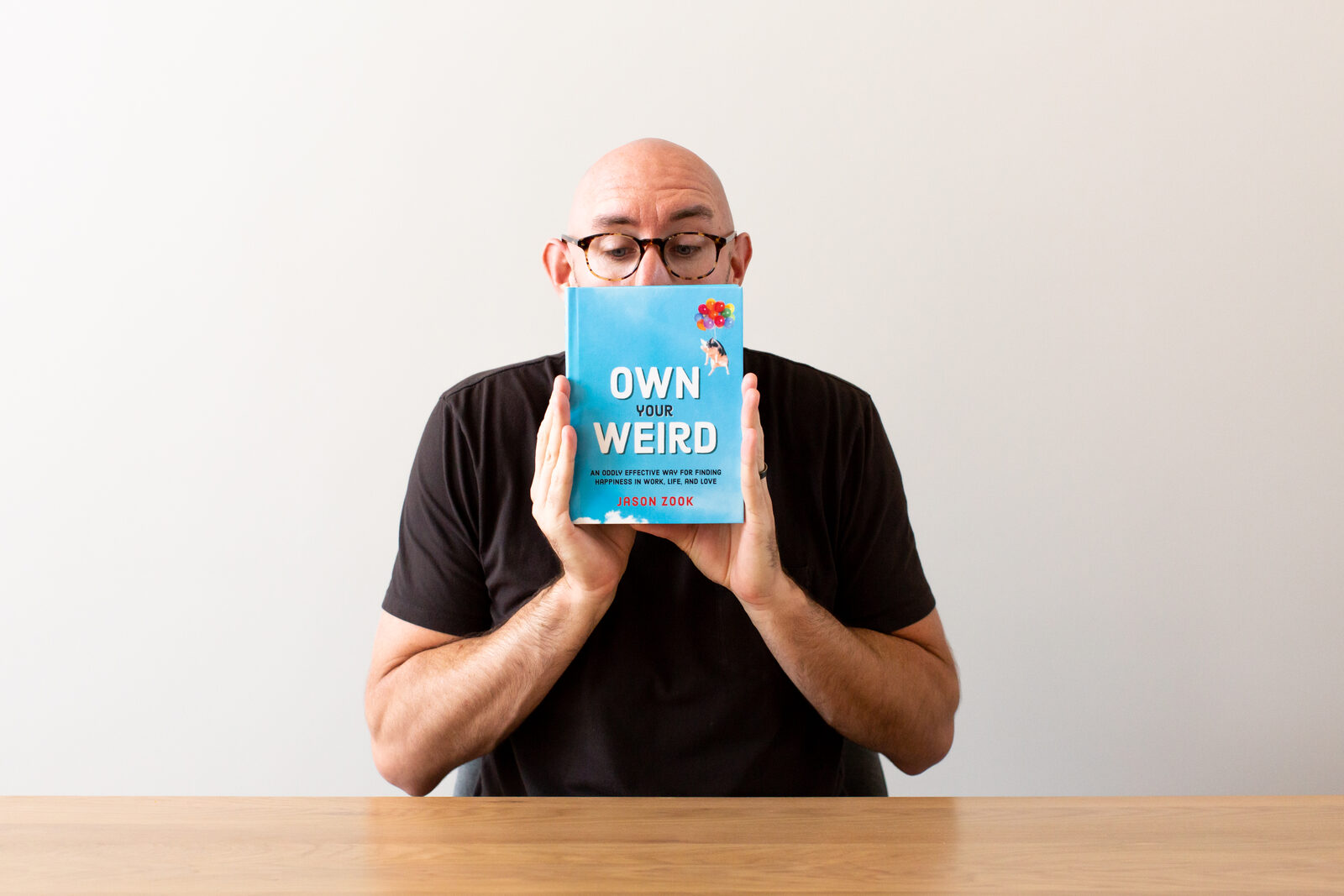
Own Your Weird. I wrote the book. I meant the title.
In 2019, Hachette's Running Press imprint published Own Your Weird: An Oddly Effective Way for Finding Happiness in Work, Life, and Love. It was not a business book in the traditional sense. It was a manifesto for anyone who had looked at the conventional playbook, entrepreneurial or otherwise, and quietly concluded it was not for them. It sold respectably. It did not sell the numbers my agent had hoped for. This is fine and also a little funny, given the thesis.
The core idea fits on a t-shirt, which is probably not an accident. Stop following someone else's blueprint. Define your own version of enough. Build your life around your actual values, not the ones the algorithm prefers. The word "weird" is doing specific work here. It's not a synonym for quirky. It's a synonym for yours.
The philosophy isn't complicated. That's what makes it hard. Simple things require you to actually do them, which is where most people, including me, mostly fail most of the time.
Every product was an experiment. Some of them stuck.
My post-IWYS career is best understood as a series of deliberate experiments, each testing a different way to earn a living without a boss, a board, or a venture capitalist patiently explaining what a power law is.
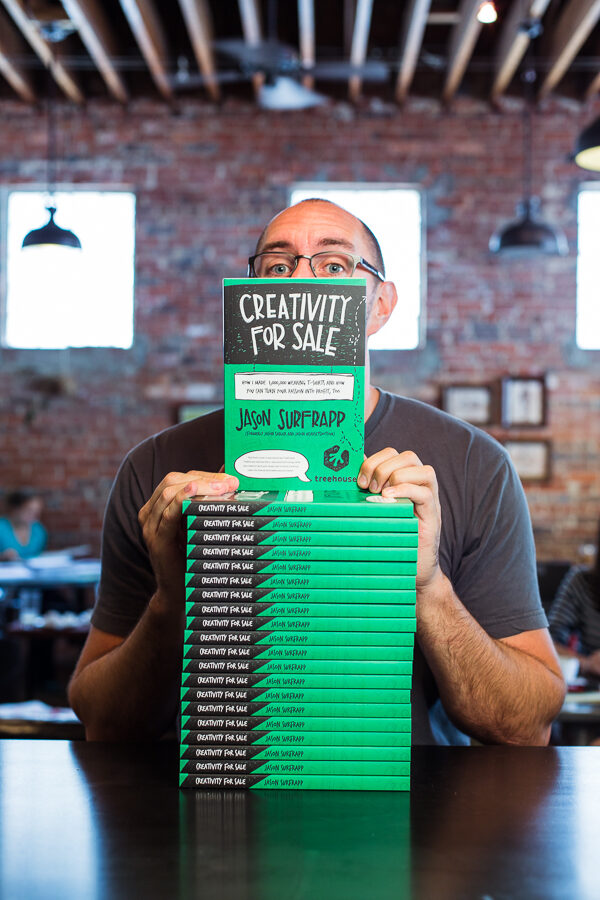
SponsorMyBook came first. Before I had written a single word of Creativity for Sale, I sold sponsorships on the pages of the unwritten book. Day one: 50+ page sponsorships plus both inside flaps. $18,000 in twenty-four hours. Final tally: $75,000 from 204 companies, for a book that did not technically exist. Over 15,000 people eventually read or downloaded it, which is more than many books that do exist.
BuyMyFuture was bolder, and also, on paper, mildly unhinged. In September 2015, I bundled every course, guide, book, and software product I had ever made (plus everything I would make in the future, forever) into a single $1,000 purchase. It was a bet on trust. A second round at $1,500. Then, with Caroline, BuyOurFuture. Combined revenue across all rounds: over $500,000. Combined complaints: surprisingly few.
Teachery, the online course platform Caroline and I built in 2014, is the quiet engine under everything else. Self-funded. No investors. No feature wars with venture-backed competitors who raised a billion dollars and still struggle with line breaks. In 2024, a $550 lifetime deal generated $100,000 on top of $100,000 in existing ARR. It remains our primary software product, largely because we haven't managed to get tired of it yet.
Wandering Aimfully, our coaching community for "intentional online business owners," launched in 2018. $100/month. A $2,000 lifetime option. A weekly podcast called Growing Steady. The name is the thesis. You don't need to know where you're going. You just need to go with intention, ideally wearing pants.
- SponsorMyBook
- $75,000
- BuyMyFuture + BuyOurFuture
- $500,000+
- Teachery (2024)
- $200,000 ARR
- Career total
- $7,000,000+
Favorite things, by repeat admission.
One way to understand me is to catalogue what I keep mentioning unprompted in newsletters, on podcasts, in the margins of my life. A partial inventory. In no particular order. Without any claim that this constitutes a personality.
A deliberately quiet list for a man who once made a living being loud. That is, more or less, the entire point.
I hate the word "bleisure."
Business plus leisure. A portmanteau so unnecessary it should be illegal in 47 states. I prefer the phrase "having a life," which requires no blending of syllables and no apology to the language.
What do you do after you've invented six careers and outlived all of them?
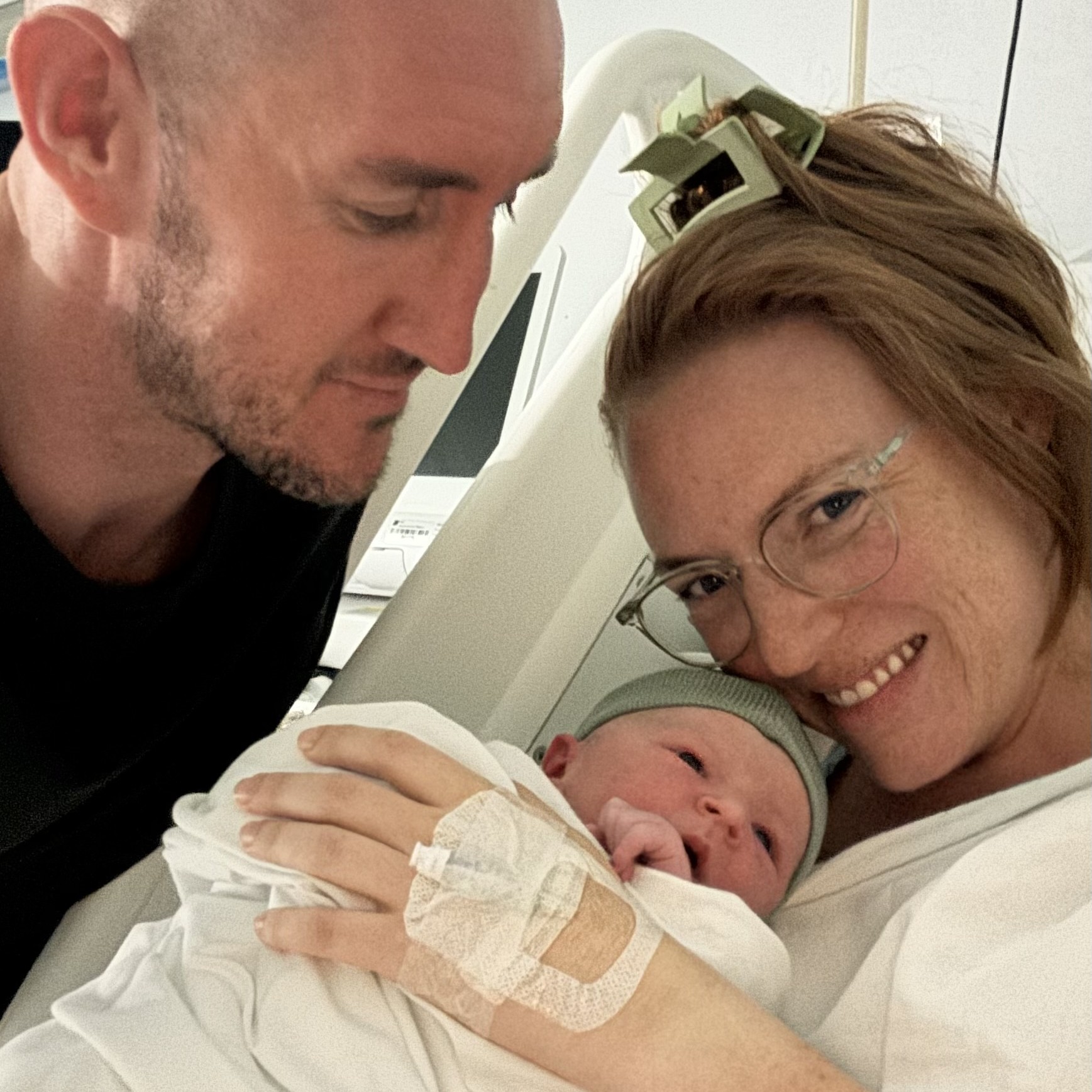
In 2026, I live in a coastal Portuguese town small enough that the cafe owner greets me in Portuguese and I respond in Portuguese that is approximately 30% correct. Caroline and I are new parents. Our daughter Leon's schedule now governs the architecture of our days, and neither of us seems to mind. The businesses, Teachery and Wandering Aimfully, run on their own rhythms. The podcast, Growing Steady, publishes every Thursday. The newsletter goes out when I have something to say, which is not the same as when an algorithm tells me to.
I'm also, in 2026, experimenting with something I call vibe coding. Using AI tools to build community-driven apps as a non-technical creator, with a stated goal of generating $100,000 from these experiments by year's end. It is, in miniature, the same move I have been making since 2009. Find a new medium. Figure out how to make it pay. Do not ask anyone's permission first.
I don't check social media more than once or twice a day. I don't read the news in the morning. I filter every professional decision through two values: control and flexibility. If a project doesn't offer both, I don't do it. This sounds simple. It is not. It requires saying no to almost everything, including money, which is the hardest no for anyone who has been $124,000 in debt.
The career, if you can call it a single career, now spans seventeen years and at least six distinct acts: t-shirt promoter, name auctioneer, book sponsor, future-seller, course platform builder, anti-hustle philosopher. If the pattern holds, there will be a seventh. If the pattern holds, it will be something no one has thought of yet, priced in a way that makes traditional business people squint, and announced in a newsletter with zero guru energy.
I am not retired. I am not famous. I am not trying to be either. I'm simply a man who figured out his enough, and then, for once, stopped.
If you made it this far, the newsletter is waiting.
One email a week from me. Building in public, dad life in Portugal, zero guru energy. The occasional cinnamon roll recipe. No sales-funnel psychology, because we just did sixteen minutes of it and it was exhausting for everyone.
Weird ideas, delivered fresh
Mondays: build log. Wednesdays: one idea, explored. Fridays: dad dispatch.
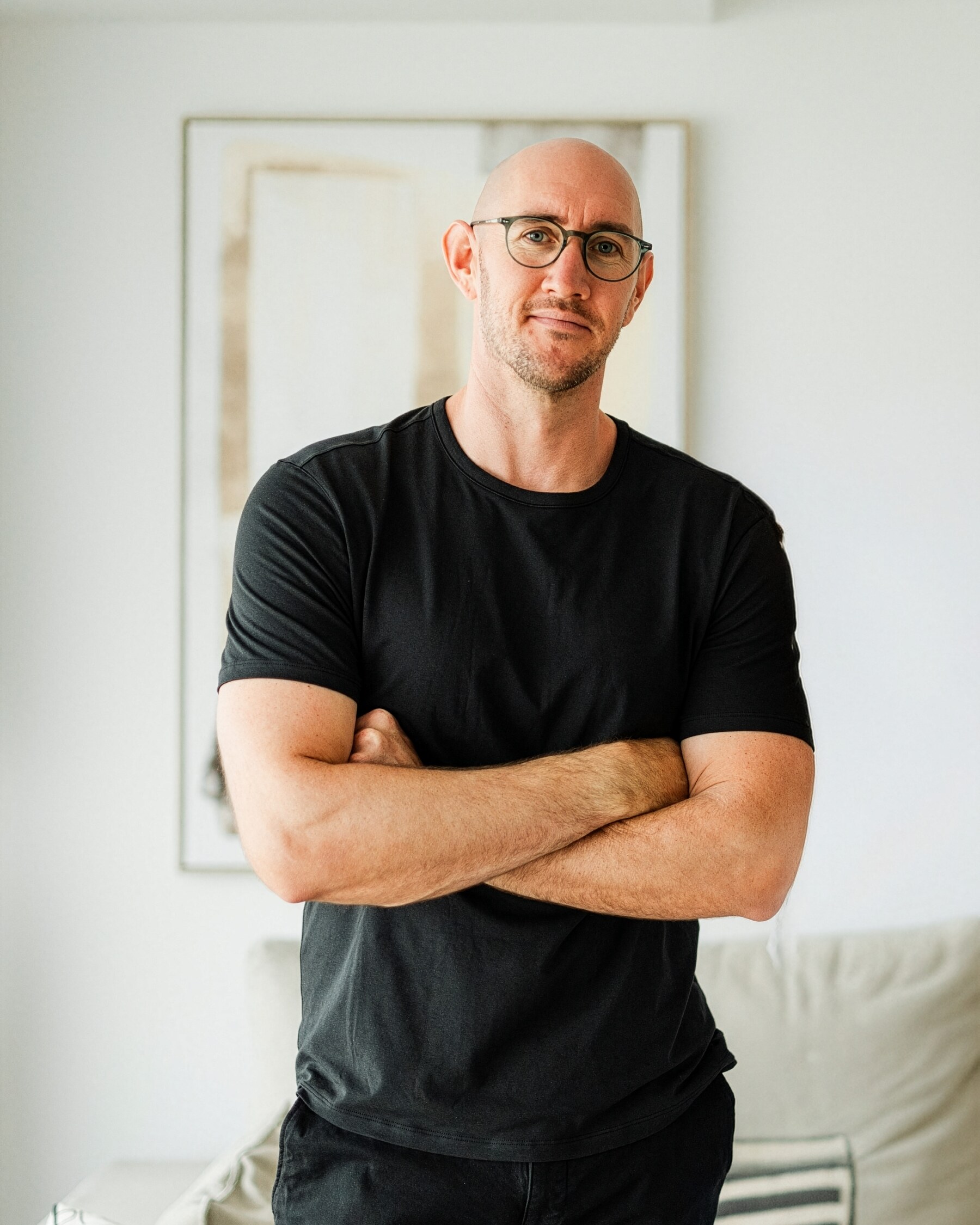
Serial entrepreneur. Six last names. Seven million dollars from weird internet businesses. One small life in Portugal, and the uncommon discipline to keep it that way.